2026-03-24
Stainless steel manifolds are not a single product but a category encompassing several designs, each suited to particular functions and industries. The primary distinction lies in their construction method and intended application.
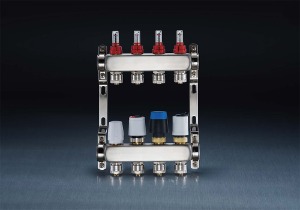
Block Manifolds (or Solid Block Manifolds): These are machined from a single solid piece of stainless steel bar or plate. Ports are drilled and tapped into the block to create the flow paths. Block manifolds are valued for their compact size, high strength, and ability to withstand high pressures. Because there are no internal welds or joints, the risk of leaks is minimized. They are commonly used in hydraulic systems, test stands, and instrumentation applications where space is limited and reliability is critical. The configuration of ports can be highly customized to meet specific system requirements.
Tube Manifolds (or Fabricated Manifolds): These are constructed by welding together sections of stainless steel pipe or tube with forged or bar stock fittings. A main header pipe is used, with branch connections welded onto it. Tube manifolds are often larger than block manifolds and are typically used for higher flow rate applications. They are common in industrial plumbing, water treatment distribution systems, and as headers for boiler or heat exchanger connections. While they can be less expensive than a large machined block for very large sizes, the welded construction introduces potential points of failure and requires careful quality control during fabrication.
Instrument Manifolds: These are specialized manifolds designed specifically for use with pressure transmitters, gauges, and other process instruments. They are typically smaller block-type manifolds that incorporate isolation, drain, and vent valves. Common configurations include two-valve, three-valve, and five-valve manifolds. A three-valve manifold, for example, allows an operator to isolate the instrument from the process line, equalize pressure on both sides of a differential pressure transmitter, and vent one side for calibration—all without removing the instrument or shutting down the entire process. These are essential in oil and gas, chemical, and power generation industries for accurate and safe instrument maintenance.
Hydraulic Manifolds: Designed for mobile and industrial hydraulic equipment, these are almost exclusively of the block type. They are machined to create complex networks of passages that direct hydraulic fluid to various valves, actuators, and pumps. By consolidating many fluid connections into a single block, hydraulic manifolds reduce the number of hoses and fittings, which minimizes potential leak points and simplifies the overall system layout. They are manufactured from stainless steel grades like 316/316L when corrosion resistance is required, such as in marine or offshore applications.
Sanitary Manifolds: Used in industries with strict hygiene requirements—such as food and beverage processing, dairy, pharmaceutical, and biotechnology—sanitary manifolds are designed for cleanability. They are typically made from 304 or 316L stainless steel, with all internal surfaces electro-polished to a smooth finish (often specified as Ra < 0.8 micrometers). This smooth finish prevents bacteria from adhering and allows for effective cleaning-in-place (CIP) and sterilization-in-place (SIP) procedures. Connections are usually tri-clamp fittings, which are easy to disassemble for inspection and cleaning.
Selecting the appropriate grade of stainless steel is a critical decision that affects the manifold's performance, lifespan, and cost. While "stainless steel" is a generic term, there are many different alloys. The two most common grades used for manifolds are 304 and 316, though others are available for specific conditions.
304 Stainless Steel: Often referred to as "18-8" (18% chromium, 8% nickel), this is the most widely used stainless steel grade. It offers good corrosion resistance in many environments, excellent formability, and good weldability. It is suitable for applications involving fresh water, food processing (in non-acidic environments), and general industrial use where exposure to chlorides or harsh chemicals is minimal. It is often a cost-effective choice for general-purpose manifolds.
316 Stainless Steel: This grade contains the same chromium and nickel as 304 but with the addition of 2-3% molybdenum. The molybdenum significantly enhances corrosion resistance, particularly against chlorides (like salt) and industrial solvents. 316 is the standard choice for marine environments, chemical processing plants, pharmaceutical manufacturing, and any application where the manifold may be exposed to corrosive media or deicing salts. For this reason, 316/316L is very common in instrument manifolds and sanitary applications.
Other Grades: For exceptionally demanding environments, other grades may be specified. 317L stainless steel has even higher molybdenum content for improved resistance to highly corrosive chemicals. Duplex stainless steels (like 2205) offer higher strength and excellent resistance to stress corrosion cracking, making them suitable for high-pressure, high-chloride environments such as offshore oil and gas platforms. The choice of grade should be based on a careful assessment of the fluid media, operating temperature, external environment, and any industry standards or regulations that apply.
Specifying a manifold involves more than just choosing a type and grade. Several technical factors must be considered to ensure the manifold will function correctly and safely in its intended system.
Pressure Rating: The manifold must be capable of withstanding the maximum operating pressure of the system, including any potential pressure surges. The pressure rating is determined by the material grade, the wall thickness (in tube manifolds), and the design of the block (in machined manifolds). It is essential to select a manifold with a pressure rating that meets or exceeds the system requirements.
Temperature Range: The operating temperature affects both the material properties and the sealing methods. Stainless steel maintains its strength over a wide temperature range, but thermal expansion must be considered, especially in longer fabricated manifolds. The temperature also dictates the type of seals or gaskets that can be used in the connections.
Port Size and Type: The size and threading of the inlet and outlet ports must match the connecting piping or tubing. Common port types include NPT (National Pipe Thread) for many industrial applications, BSP (British Standard Pipe) for international applications, SAE (Society of Automotive Engineers) ports for hydraulic systems, and tri-clamp fittings for sanitary lines. The manifold must be specified with the correct port configuration.
Flow Capacity (Cv): The manifold's internal passage sizes determine its flow coefficient (Cv), which is a measure of its flow capacity at a given pressure drop. If the passages are too small for the required flow rate, the manifold will create an excessive pressure drop, reducing system efficiency. Calculating the required Cv based on the desired flow rate and allowable pressure loss is a key step in proper sizing.
Number of Ports and Configuration: The manifold must have the correct number of ports and the right spatial arrangement for the application. A hydraulic manifold might require a specific layout to mount valves in a particular sequence. A distribution manifold for water might need outlets spaced evenly along its length. Custom machining allows for virtually any configuration, but standard configurations are available for common applications.
Compliance and Certifications: Depending on the industry, the manifold may need to meet specific standards or carry certain certifications. For example, manifolds used in potable water systems may require NSF/ANSI 61 certification. Those used in hazardous locations may need to meet pressure equipment directives (like PED in Europe) or have material traceability documentation.
While manifolds can be made from materials such as brass, carbon steel, plastic (PVC, PP), or even titanium, stainless steel offers a distinct set of advantages that make it the preferred choice in many applications.
Corrosion Resistance: This is the primary advantage of stainless steel. Unlike carbon steel, which requires protective coatings to resist rust, stainless steel forms a passive chromium oxide layer that protects it from corrosion. This makes it suitable for use with a wide range of fluids, including water, chemicals, and steam, as well as for installation in corrosive environments. Compared to brass, stainless steel is generally more resistant to a broader range of chemicals and to dezincification.
Strength and Durability: Stainless steel offers high mechanical strength, allowing manifolds to withstand high pressures and physical impacts. This strength is retained across a broad temperature range, from cryogenic conditions to several hundred degrees Celsius. This durability translates into a long service life, even under demanding operating conditions.
Hygiene and Cleanability: The ability to polish stainless steel to a very smooth surface finish makes it the material of choice for sanitary applications. It does not harbor bacteria, is easy to clean, and can withstand harsh cleaning chemicals and high-temperature sterilization processes. This is a critical requirement that materials like carbon steel or many plastics cannot meet.
Temperature Resistance: While plastics can degrade at elevated temperatures and have limited low-temperature capability, stainless steel maintains its mechanical properties over a very wide range. This makes it suitable for applications involving steam, hot oils, or cryogenic fluids.
Compatibility: Stainless steel is compatible with a vast array of fluids and gases. It is generally inert and does not contaminate the media passing through it, which is essential in pharmaceutical, food, and high-purity applications. Its compatibility also extends to a wide range of sealing materials and connection types.
Copyright © Zhejiang Jiafu HVAC Co., Ltd. All Rights Reserved.


 English
 русский