2025-12-19
Y-Strainer: Angled Debris Removal
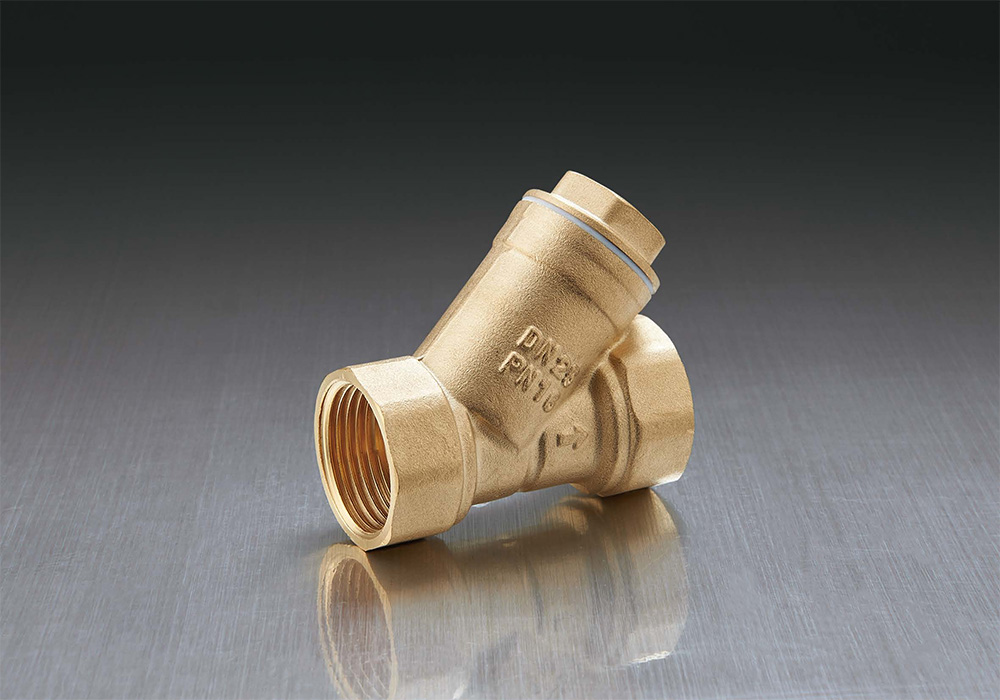
The Y-strainer is named for its distinctive "Y" shape, which allows the strainer element to be positioned at an angle relative to the main valve body.
Structure: It consists of a main pipeline body with a side branch that houses a mesh or perforated screen. The angled design allows fluid to flow through the strainer while capturing particles in the side chamber.
Function: Y-strainers remove solid particles from the fluid without significantly restricting flow. The angled screen can be easily removed for cleaning, reducing maintenance downtime.
Applications: Y-strainers are commonly used in water supply lines, heating systems, and pump protection. They are suitable for systems with moderate debris levels and where inline maintenance is needed.
Advantages: The angled design allows fluid to flow smoothly with minimal pressure loss while still capturing debris effectively.
T-Strainer: Inline Filtration for Compact Spaces
T-strainers are designed to provide filtration in a straight inline configuration.
Structure: The T-strainer resembles a "T" shape, with a straight passage for the main fluid flow and a perpendicular branch that holds the mesh screen. The screen captures debris while allowing fluid to continue through the main line.
Function: T-strainers are used to remove particles from fluids in applications where space is limited, and a direct inline installation is preferred.
Applications: They are frequently used in residential plumbing, small-scale industrial systems, and heating circuits where inline debris protection is necessary.
Advantages: The T-strainer's straight design simplifies installation in tight spaces and allows for easy screen removal and cleaning.
Basket Strainer: Large Capacity Debris Collection
Basket strainers are designed for applications with higher fluid volumes or larger debris loads.
Structure: The valve body contains a cylindrical or basket-shaped screen that holds a larger volume of particles. The screen can be lifted out for cleaning without disconnecting the pipeline.
Function: Basket strainers remove solid debris efficiently, providing protection for pumps, valves, and other downstream equipment. Their larger screen area allows them to handle higher flow rates and heavier contamination.
Applications: Basket strainers are commonly used in industrial water systems, cooling systems, and chemical processing plants where high debris load is expected.
Advantages: Their large collection capacity reduces the frequency of maintenance and is suitable for continuous operation in demanding environments.
Duplex Strainer: Continuous Operation
Duplex strainers are designed to provide filtration without interrupting system operation.
Structure: A duplex strainer consists of two strainer chambers arranged in parallel with a switching valve. One chamber can be cleaned while the other continues to filter fluid.
Function: By alternating between the two chambers, duplex strainers allow continuous operation in pipelines where downtime is undesirable.
Applications: These strainers are used in industrial fluid systems, cooling circuits, and large-scale water treatment facilities. They are particularly useful in processes that require uninterrupted filtration.
Advantages: Duplex strainers provide operational continuity and minimize system downtime, making them ideal for critical applications.
Brass strainer valves play an essential role in protecting pipelines, pumps, and equipment by removing debris and preventing blockages. Y-strainers offer angled filtration for smooth flow and moderate debris loads. T-strainers provide compact inline filtration suitable for residential and small industrial systems. Basket strainers handle higher fluid volumes and larger debris, making them suitable for industrial and cooling applications. Duplex strainers enable continuous operation with parallel chambers, ensuring uninterrupted filtration in critical systems. Understanding the types and functions of brass strainer valves helps engineers and users select the appropriate valve for their specific needs, ensuring reliable and efficient system operation.
Copyright © Zhejiang Jiafu HVAC Co., Ltd. All Rights Reserved.


 English
 русский