2026-08-14
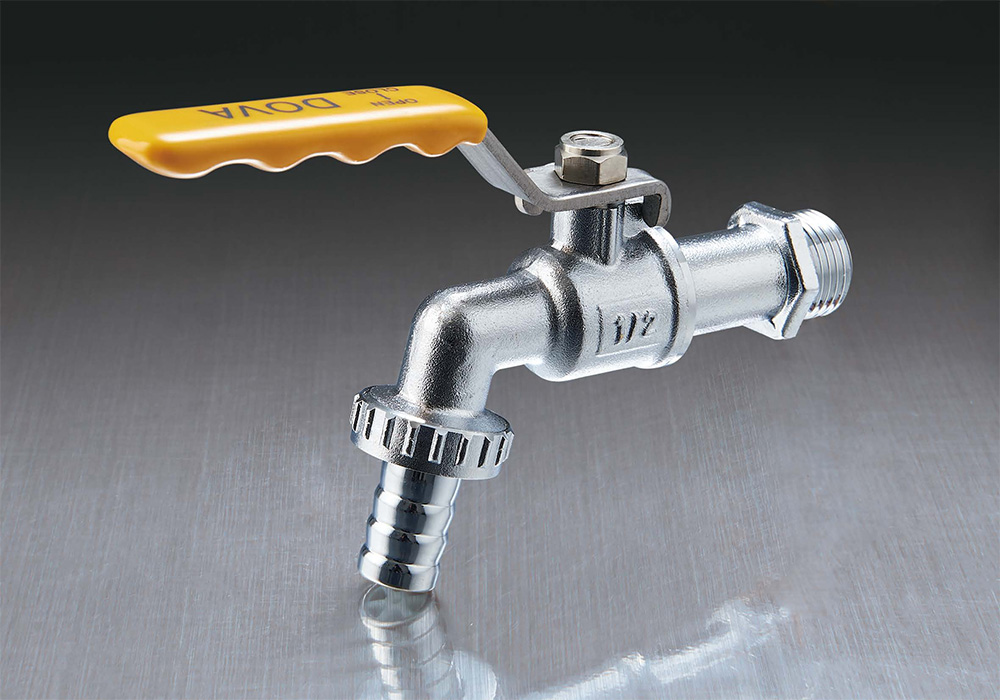
A bibcock is the tap on the exterior wall, the one the garden hose screws onto. It freezes in winter and bakes in summer. It gets yanked by the hose and ignored for months. A brass bibcock handles this life because brass resists corrosion, tolerates freezing better than steel, and does not crack under UV like plastic. A brass bibcock manufacturer builds these taps for plumbing wholesalers, hardware retailers, and export markets where the outside tap is as essential as the kitchen sink.
The body is forged or cast brass, typically CW617N or an equivalent lead-free grade for potable water compliance. Brass machines into clean threads that seal without leaking. It handles water pressure up to 10 bar or more. A brass bibcock with a forged body has denser grain structure and better pressure resistance than a cast body.
The spindle is brass as well, running through a bonnet packed with PTFE or graphite sealing rings. When the handle turns, the spindle moves a rubber or EPDM washer against the valve seat. The water stops. A brass bibcock manufacturer machines the spindle and bonnet threads to a tight tolerance so the handle turns smoothly without binding.
The handle itself is metal or reinforced plastic. A cast iron wheel handle gives leverage for hand-tight shutoff. A wing handle or a lever handle works where space is tight. A brass bibcock manufacturer offers handle options matched to the installation.
A bibcock is not a kitchen tap. It lives outdoors. The wall flange sits against the brick or stucco. The hose connector is a threaded spout with a standard 3/4-inch BSP or NPT thread. A brass bibcock with a vacuum breaker on the spout prevents backflow of contaminated water into the house supply.
Frost protection is the seasonal concern. A standard brass bibcock holds water in the body and splits when it freezes. A frost-proof bibcock places the valve seat deep inside the wall where the temperature stays above freezing. The water drains out when the tap is closed. A brass bibcock manufacturer builds both types and labels them clearly so the installer gets the right one for the climate.
Here is what a brass bibcock needs to deliver:
The washer presses against the seat. Over time, the washer hardens or the seat pits. A brass bibcock with a replaceable washer and a renewable seat lets the user rebuild the tap instead of replacing the whole unit. A brass bibcock manufacturer that ships with a spare washer and a seat grinding tool supports long-term maintenance.
The packing nut under the handle tightens to stop a spindle leak. A brass bibcock with an accessible packing nut can be snugged up without removing the handle or shutting off the water.
The body cracks at the thread root from water hammer or overtightening the hose fitting. A forged brass body resists cracking better than a cast one. The spindle seizes in the bonnet because the threads galled. A brass bibcock manufacturer uses different brass alloys for the spindle and bonnet to prevent galling. The handle strips on the spindle because a steel spindle has a softer brass handle. A proper taper fit and a locking nut prevent this.
A brass bibcock is a simple product. A body. A spindle. A washer. A handle. It sits on the wall for years, turned on to fill buckets and wash cars, turned off and forgotten. Choose a manufacturer that forges the body from quality brass, machines the threads to seal, and builds the tap to be rebuilt rather than replaced. The hose will connect, the water will flow, and the tap will close tight when the handle turns. That is the whole job.
Copyright © Zhejiang Jiafu HVAC Co., Ltd. All Rights Reserved.


 English
 русский