2026-08-07
A check valve is a simple device. Flow in one direction opens it. Flow in the other direction closes it. Nobody looks at it. Nobody adjusts it. It sits in the line and waits for a reverse flow condition that might come once a year or once a minute. When that condition comes, the valve has to seat immediately and seal completely. A brass check valve manufacturer builds these components for water systems, fuel lines, compressed air circuits, and hydraulic applications where backflow is not an inconvenience. It is a contamination risk, an equipment failure, or a safety hazard.
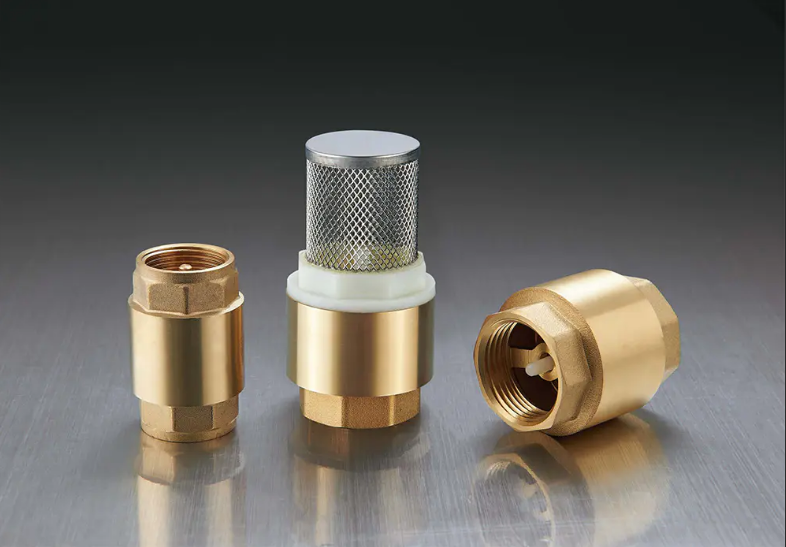
A check valve that weeps when closed has failed at its only job. The sealing mechanism varies by design. A spring-loaded poppet seats a disc against a machined brass face. A swing check uses a hinged flap that closes under gravity and reverse flow. A ball check lifts a ball off a seat during forward flow and drops it back under reverse pressure.
A brass check valve manufacturer cuts the seat directly into the valve body or presses in a machined insert. The seat surface finish and concentricity with the closure element determine whether the valve seals tight or passes a slow leak. A poppet that does not land square wears the seat unevenly. A ball that is out of round never seats the same way twice. These are machining tolerance problems, not material problems, and they trace straight back to the factory floor.
Spring selection matters in spring-loaded designs. Too stiff a spring creates excess cracking pressure and restricts forward flow. Too weak a spring fails to seat the poppet against minor back pressure. A brass check valve manufacturer specifies spring force to match the installation orientation and the expected back pressure. A valve installed vertically needs a different spring than one installed horizontally. A valve closing against a standing column of water needs more spring than one closing against air.
Brass earns its place in check valves for reasons that go beyond cost. It machines predictably. It resists corrosion in water, air, and most fuel applications. It handles temperatures that would warp or soften plastic. It does not spark under impact, which matters in compressed air and fuel vapor environments.
A brass check valve manufacturer sources bar stock or forgings with controlled lead content for machinability, or lead-free brass for potable water compliance. The difference affects where the valve can legally be installed. A leaded brass valve works fine on a compressed air line. It cannot go into a drinking water system in markets with lead content restrictions. The manufacturer stamps the body or provides material certs that tell the installer which is which.
The wall thickness of the valve body determines the pressure rating. A thin-walled body machined from undersized bar stock costs less and bursts sooner. A brass check valve manufacturer that designs the body with adequate wall thickness for the rated working pressure, plus a safety factor, builds valves that survive pressure spikes without cracking at the threaded connections.
Domestic water systems use brass check valves on pump discharge lines to prevent backflow into the well or the municipal supply. The valve opens when the pump runs and closes when it stops. If it leaks, the pump cycles on and off against no demand, wearing out the motor and the pressure switch. A brass check valve manufacturer supplying this market knows the difference between a valve that seals and a valve that almost seals is a pump replacement bill.
Compressed air systems use check valves between the compressor head and the receiver tank. The valve keeps tank pressure from bleeding back into the compressor. A valve that fails open forces the compressor to restart against a loaded head, pulling higher starting current and shortening motor life. A brass check valve manufacturer building for compressed air applications tests valves for rapid cycling. A compressor check opens and closes with every pump stroke. That is millions of cycles over the life of the machine.
Fuel systems on generators, marine engines, and industrial burners use brass check valves to maintain prime and prevent fuel from draining back to the tank. A valve that leaks a few drops an hour is a valve that creates a hard-start condition or an air lock in the fuel line. A brass check valve manufacturer producing for fuel applications verifies seal performance with the specific fuel type, not just with water. Diesel, gasoline, and ethanol blends each affect seal materials differently.
Here is what a properly built brass check valve delivers across applications:
The cost of the valve is nothing compared to the cost of what it protects. A pump. A compressor. A water supply. A fuel system. A brass check valve manufacturer that cuts corners on seat machining or spring quality ships a valve that works on the test bench and fails in the field six months later.
Thread quality is a basic indicator of how the rest of the valve is made. Tapered pipe threads cut with worn tooling or cast threads that were never chased produce a poor seal at the connection point. A brass check valve manufacturer that delivers clean, burr-free threads with consistent taper makes the installer's job easier and the final connection reliable. Threads that chew up sealant tape on the way in are a sign the rest of the valve probably got the same level of attention.
A brass check valve is small, passive, and unglamorous. It sits in a pipe run somewhere and does nothing visible for years until the day flow reverses. On that day it has one task. Close. Seal. Hold. Choose a brass check valve manufacturer that machines seats properly, matches springs to the application, and builds bodies to the rated pressure. The valve will do its job when the pump stops and the column of water tries to run backward. That is the whole reason it exists.
Copyright © Zhejiang Jiafu HVAC Co., Ltd. All Rights Reserved.


 English
 русский