2026-01-23
Brass ball valves are commonly categorized by their housing construction, port size, and operational mechanism. The table below summarizes these key types and their characteristics.
|
Category |
Type |
Key Characteristics |
Typical Applications |
|
By Housing Construction |
One-Piece (Single Body) |
Body is a single casting. Inexpensive. Non-repairable; must be replaced if internals fail. |
Low-cost, permanent installations where repair is not anticipated. |
|
|
Two-Piece |
Body consists of two sections joined, usually in the middle. Can be disassembled for maintenance or cleaning. |
General plumbing, water lines, where serviceability is desired. |
|
|
Three-Piece |
Body has two end caps and a center section. End caps allow easy removal without disturbing pipe connections. |
Industrial systems, process lines requiring frequent service or inspection. |
|
By Port Size |
Standard Port (Reduced Port) |
The bore diameter is smaller than the pipe's inner diameter. Creates a slight restriction and pressure drop. |
Most residential and commercial applications where full flow is not critical. |
|
|
Full Port (Full Bore) |
The bore diameter matches the pipe's inner diameter. Minimizes flow restriction and pressure loss. |
Systems requiring minimal pressure drop, such as pump discharge or main supply lines. |
|
By Operation/Actuation |
Manual |
Operated by a lever or wrench. Most common and economical. |
Virtually all standard plumbing and industrial shut-off applications. |
|
|
Screw-Down (Irritated) |
Features a threaded stem. Turning the handle raises or lowers the ball, providing a mechanical advantage for high-pressure sealing. |
Gas lines, high-pressure water applications. |
|
|
Lockable |
Lever handle can be secured with a padlock or has a built-in locking tab for safety and tamper resistance. |
Facilities management, industrial safety, chemical lines. |
This typology provides a framework for selection. A one-piece, standard-port manual valve suffices for a simple garden hose bib, while a three-piece, full-port valve might be specified for a chemical process line needing regular maintenance and unrestricted flow. The choice balances initial cost, performance needs, and long-term service requirements.
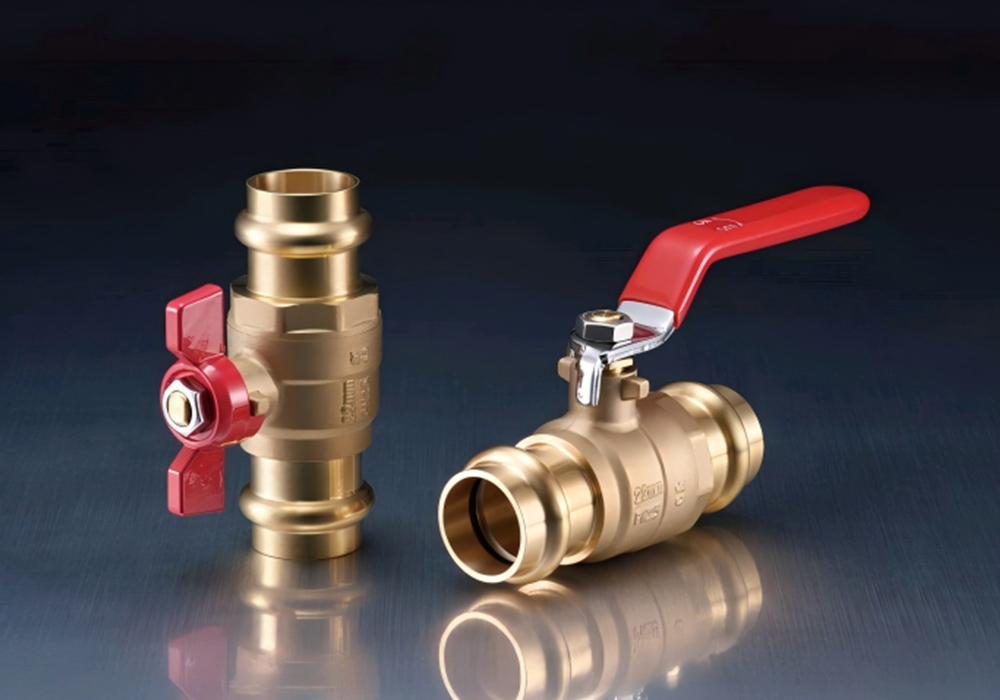
The durability of a full-port ½-inch brass ball valve is not inherent to its size or port configuration alone. It is determined by the interplay of material quality, manufacturing standards, and the operating environment. When these factors are correctly aligned, such a valve can provide reliable, long-term service.
The primary material, brass, is an alloy of copper and zinc. Its corrosion resistance, particularly to water and certain chemicals, forms the basis for its durability. Dezincification—a process where zinc leaches out, leaving a porous copper structure—can compromise brass in aggressive water conditions. Valves made with dezincification-resistant (DZR) brass or those conforming to standards like ASTM B62 mitigate this risk. The internal components, particularly the ball and stem, are often chrome-plated brass or stainless steel for enhanced wear and corrosion resistance. Seals, typically made from materials like PTFE (Teflon), must be compatible with the fluid media and temperature range; their integrity is crucial for a leak-free operation.
The "full-port" design implies a larger bore, which reduces flow velocity and turbulence compared to a standard-port valve. This can decrease wear on the ball and seats over time, potentially extending service life. However, the larger internal cavity may also mean a slightly larger surface area exposed to the fluid, though this is a minor consideration in non-aggressive environments.
The operating conditions are decisive. A ½-inch full-port brass ball valve rated for residential water pressure (typically 50-80 PSI) will perform durably if used within its specifications. Exposure to excessive pressure, water hammer, temperatures beyond the seal ratings (often -20°F to 400°F for standard PTFE), or incompatible fluids (like highly acidic solutions or ammonia) will accelerate failure. Proper installation is also critical: avoiding excessive torque on the pipe threads, ensuring proper alignment, and supporting the piping to prevent stress on the valve body all contribute to its operational longevity.
The selection of brass alloy is fundamental to the valve's function and durability. The term "brass" refers to a range of copper-zinc alloys. For ball valves, a common material is dezincification resistant (DZR) brass, often conforming to standards like CW602N (formerly known as CZ132 or alloy UNS C37700). The primary material issue addressed by this alloy is dezincification, a form of corrosion where zinc selectively leaches out of the alloy in certain water conditions, leaving behind a porous, weak copper structure. DZR brass contains a small addition of arsenic, antimony, or phosphorus, which inhibits this process, making the valve suitable for potable water systems.
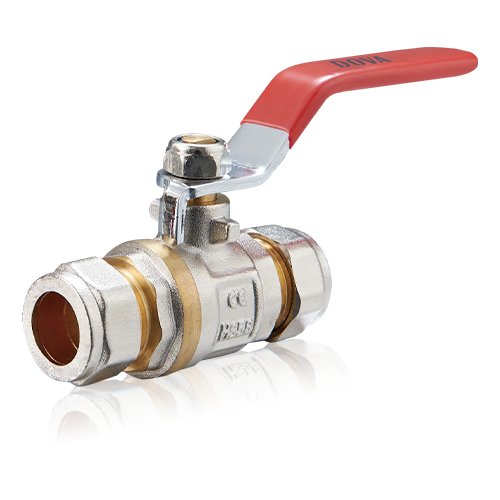
Other material considerations include the ball and stem. The ball is typically chrome-plated brass or stainless steel to provide a hard, smooth, and corrosion-resistant sealing surface. The stem is often made from a stronger brass alloy or stainless steel to withstand torsional forces. Seat seals are made from polymers like PTFE (Teflon) or reinforced PTFE, chosen for their low friction, chemical resistance, and ability to form a reliable seal against the ball. The compatibility of all these materials with the intended fluid service (water, oil, gas) and environmental conditions is a primary engineering consideration to prevent galvanic corrosion, chemical degradation, or premature wear.
The craftsmanship of a brass ball valve resides in the precision machining and finishing of its key components. The valve body, typically a forging or casting, is machined on CNC lathes and milling machines to create precise threaded or solder-cup end connections and an internal cavity that accurately houses the ball. The dimensional accuracy of this cavity is critical for proper alignment and leak-free operation.
The ball itself is a sphere machined to a high degree of sphericity. A through-hole (the port) is bored with precise diameter and edge conditions. The ball is then usually chrome-plated to a specified thickness, and the surface is polished to a very fine finish (often a mirror finish) to ensure a perfect seal with the soft seat material and to minimize operating torque.
The stem, which connects the handle to the ball, is machined with a flat or splined section to engage the ball and a threaded section to interface with the valve body's packing gland. The precision of this machining ensures smooth rotation without excessive play. Finally, assembly craftsmanship involves carefully installing the seats, ball, stem, and seals (like O-rings and stem packing) with the correct compression to achieve a seal without over-tightening, which would increase torque and cause rapid wear.
The manufacturing process is a sequential series of operations that transform raw materials into a finished, tested valve. The process typically follows these stages:
Copyright © Zhejiang Jiafu HVAC Co., Ltd. All Rights Reserved.


 English
 русский