2026-06-12
A hydronic heating system has one pipe bringing hot water in. Several pipes carrying it out to different zones. The manifold is where the split happens. A 3/4-inch HVAC stainless steel manifold takes the main supply and divides it. One zone for the living room. One for the bedrooms. One for the basement. Each zone has its own valve. Each room gets the right amount of heat. Here is what contractors look for.
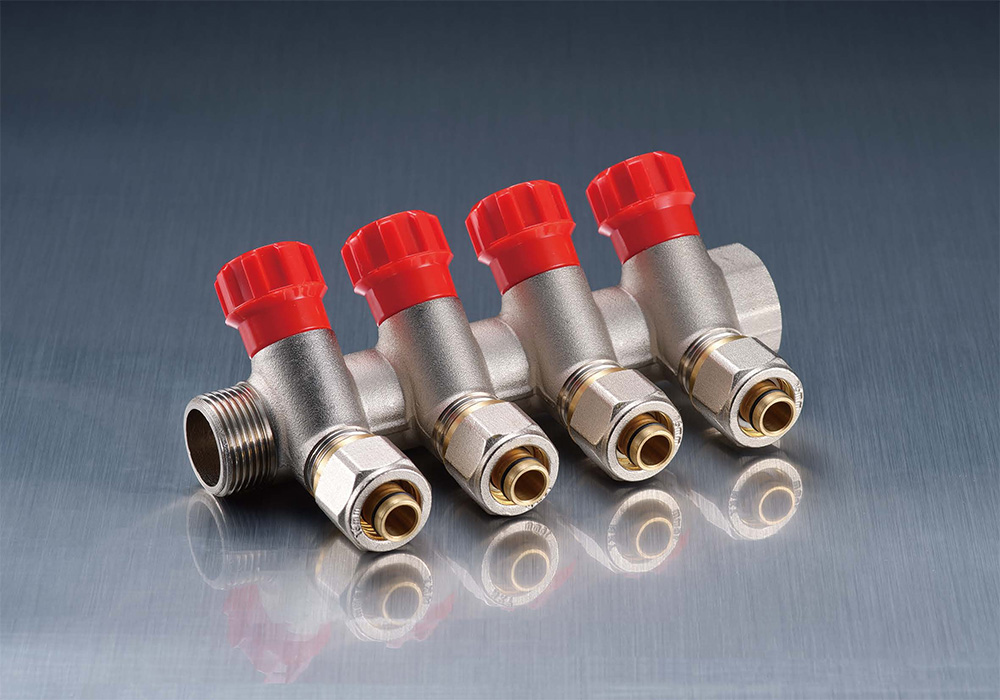
The manifold distributes hot water from one supply line to multiple circuits
A 3/4-inch HVAC stainless steel manifold has one inlet. Several outlets. Hot water comes in through the inlet. The manifold splits it. Each outlet feeds a separate loop of pipe. The loops go to different rooms or different radiators.
The return side works the same way. Water comes back from each loop. The return manifold collects it. One pipe takes it back to the boiler.
Each outlet has a valve for balancing flow
Not every room needs the same amount of heat. A 3/4-inch HVAC stainless steel manifold has a valve on each outlet. Turn the valve. More water flows. Close it partially. Less water flows. The contractor balances the system so every room reaches the same temperature.
Some manifolds have flow meters. The contractor sees exactly how much water is going to each zone. No guessing.
Stainless does not corrode like brass in some water conditions
Brass works fine in water. But some water has minerals that attack brass. Dezincification. The brass turns to soft copper. It leaks. A 3/4-inch HVAC stainless steel manifold does not have this problem. Stainless resists corrosion in almost any water.
Plastic manifolds are cheaper. They do not corrode. But they crack if the system freezes. They bend under high temperature. Stainless stays rigid.
Stainless handles higher temperatures and pressures
A 3/4-inch HVAC stainless steel manifold handles water up to 200 degrees Fahrenheit. Pressure up to 150 PSI. Plastic manifolds soften at high temperatures. They bulge. They leak.
Here is how manifold materials compare:
Number of outlets matches the zone count
A 3/4-inch HVAC stainless steel manifold comes with 2 to 12 outlets. A small house needs 4 to 6 outlets. A large house needs 8 to 12. The contractor counts the number of heating loops. Buys a manifold with that many outlets.
Extra outlets can be capped. Not enough outlets means adding a second manifold. More work. More fittings.
Valve type affects control precision
Ball valves are simple. Quarter turn. On or off. A 3/4-inch HVAC stainless steel manifold with ball valves is cheap. Hard to balance. The valve is either open or closed. Not much in between.
Needle valves give fine control. Turn the handle. The flow changes slowly. A 3/4-inch HVAC stainless steel manifold with needle valves balances easily. The contractor gets each zone exactly right.
Here is how valve types compare:
Port size matches the pipe going to each zone
The manifold outlet needs to fit the pipe. A 3/4-inch HVAC stainless steel manifold usually has 1/2-inch outlets. That matches standard PEX tubing for radiant floor heat. Some have 3/4-inch outlets for larger zones.
Check the connection type. Compression fittings work with PEX. Threaded fittings work with metal pipe. Push-to-connect fittings are fastest. The pipe pushes in. A grab ring holds it.
The valves leak at the stem
Cheap 3/4-inch HVAC stainless steel manifold products use poor seals. The valve stem leaks. Water drips down the manifold. The insulation gets wet. The heat escapes.
The manifold cracks at the welds
The outlets are welded to the main pipe. Cheap welding leaves weak spots. Pressure builds. The weld cracks. Water sprays. The system shuts down.
The flow meters stick
Flow meters are plastic. Cheap plastic sticks. The meter shows the wrong flow. The contractor balances the system wrong. Some rooms are cold. Some are hot.
The threads strip when connecting pipes
Soft stainless. Cheap 3/4-inch HVAC stainless steel manifold products have shallow threads. The fitting goes on. The installer tightens. The threads strip. The fitting leaks.
A 3/4-inch HVAC stainless steel manifold is the heart of a hydronic system. It sends the right amount of heat to every room. It needs to last for decades inside a wall or under a floor.
Buy stainless, not brass or plastic. Get enough outlets for all your zones. Choose needle valves for easy balancing. Check the weld quality. Make sure the threads are deep.
A cheap manifold saves money today. It leaks tomorrow. The leak is inside a wall. The drywall comes down. The repair costs thousands.
A good manifold costs more upfront. It lasts for the life of the building. No leaks. No corrosion. No callbacks.
Contractors who use cheap manifolds learn the hard way. The ones who use good manifolds sleep better at night. Be the second one. Your customers will never see the manifold. That is fine. But they will feel the heat. Even in every room. That is the goal. A good manifold makes it happen.
Copyright © Zhejiang Jiafu HVAC Co., Ltd. All Rights Reserved.


 English
 русский